


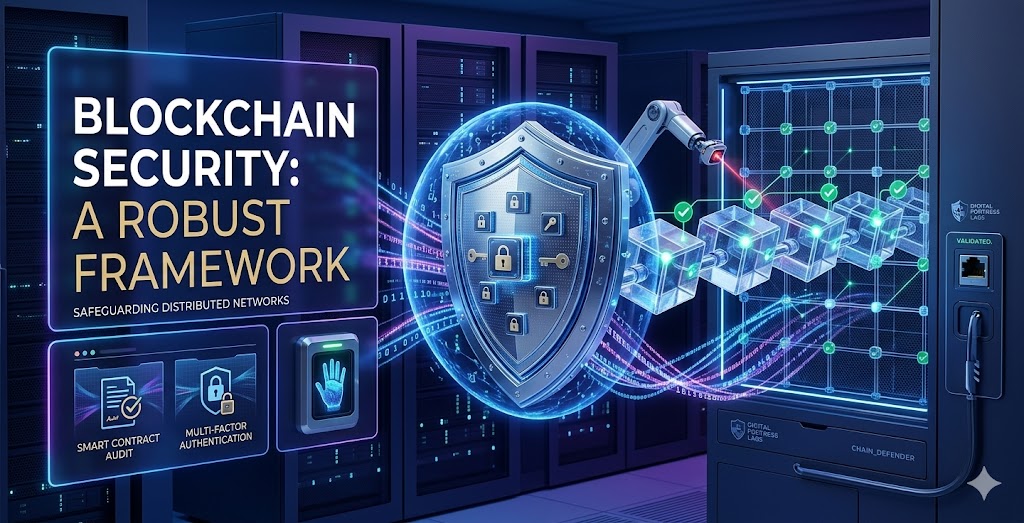
Blockchain Security: The Complete Guide for Students and Cyber Security Professionals
Introduction to Blockchain Security
As businesses, governments, financial institutions, and technology companies increasingly adopt blockchain technology, the need for robust blockchain security has become more important than ever. Blockchain has transformed the way digital transactions, records, and assets are managed by offering transparency, decentralization, and immutability. However, despite its reputation for being highly secure, blockchain systems are not immune to cyber threats.
Blockchain security refers to the combination of technologies, policies, cybersecurity practices, and protocols used to protect blockchain networks, digital assets, smart contracts, and users from cyber attacks, fraud, and unauthorized access.
For students pursuing careers in Cyber Security, Artificial Intelligence, Data Science, Digital Marketing, and Information Technology, understanding blockchain security is becoming an essential skill. Organizations worldwide are actively seeking professionals who can secure blockchain networks and protect valuable digital assets.
This guide explores blockchain security, its importance, threats, security mechanisms, best practices, career opportunities, and future trends while helping students understand why blockchain expertise can be a valuable addition to their professional skill set.
What is Blockchain Security?
Blockchain security is the implementation of security measures designed to protect blockchain networks and their associated data from malicious attacks, unauthorized access, fraud, and operational failures.
A blockchain is a decentralized digital ledger that records transactions across multiple computers. Each transaction is verified and stored in blocks that are linked together using cryptographic techniques.
Because blockchain networks operate without a central authority, maintaining security becomes a shared responsibility among participants, developers, validators, and cybersecurity professionals.
Blockchain security focuses on:
- Protecting digital transactions
- Securing cryptocurrency assets
- Preventing unauthorized modifications
- Ensuring network integrity
- Protecting smart contracts
- Maintaining data confidentiality
- Detecting cyber threats
Understanding Blockchain Technology
Before exploring blockchain security, it is important to understand how blockchain works.
Blocks
A block contains transaction information, timestamps, and cryptographic hashes.
Each block stores:
- Transaction data
- Previous block hash
- Current block hash
- Timestamp
Chain
Blocks are linked together to form a continuous chain. Every new block references the previous block, creating a secure and immutable record.
Decentralization
Unlike traditional databases controlled by a central authority, blockchain networks distribute data across multiple nodes.
This decentralized structure reduces the risk of a single point of failure.
Consensus Mechanisms
Consensus algorithms help blockchain participants agree on the validity of transactions.
Popular mechanisms include:
- Proof of Work (PoW)
- Proof of Stake (PoS)
- Delegated Proof of Stake (DPoS)
- Practical Byzantine Fault Tolerance (PBFT)
These mechanisms play a critical role in blockchain security.
Why Blockchain Security is Important
Protection Against Fraud
Blockchain security prevents fraudulent transactions and unauthorized modifications to transaction records.
Digital Asset Protection
Cryptocurrencies, NFTs, and digital assets require strong security controls to prevent theft and hacking.
Data Integrity
Blockchain ensures that records remain accurate and tamper-resistant.
Regulatory Compliance
Organizations must comply with security regulations and data protection requirements.
Business Trust
Secure blockchain networks build confidence among customers, investors, and stakeholders.
Key Components of Blockchain Security
Cryptography
Cryptography forms the foundation of blockchain security.
It provides:
- Data encryption
- Digital signatures
- Authentication
- Integrity verification
Decentralized Architecture
Blockchain distributes information across multiple nodes, reducing vulnerabilities associated with centralized systems.
Consensus Protocols
Consensus mechanisms verify transactions and prevent malicious actors from manipulating records.
Smart Contracts
Smart contracts are self-executing programs that automate agreements and transactions.
Proper security auditing is essential to prevent vulnerabilities.
Access Control
Blockchain platforms implement identity and access management systems to restrict unauthorized actions.
How Cryptography Secures Blockchain Networks
Hash Functions
Hashing converts transaction data into unique cryptographic strings.
Benefits include:
- Data integrity
- Tamper detection
- Transaction verification
Popular algorithms include:
- SHA-256
- SHA-3
Public Key Cryptography
Users possess:
- Public keys for receiving transactions
- Private keys for authorizing transactions
Private key security is critical for protecting blockchain assets.
Digital Signatures
Digital signatures verify transaction authenticity and prevent unauthorized modifications.
Common Blockchain Security Threats
Despite its strong security foundation, blockchain technology faces several cyber threats.
51% Attack
A 51% attack occurs when a single entity gains control of more than half of a blockchain network's computing power.
Consequences include:
- Double spending
- Transaction manipulation
- Network disruption
Smart Contract Vulnerabilities
Coding errors in smart contracts can be exploited by attackers.
Examples include:
- Reentrancy attacks
- Integer overflow attacks
- Logic flaws
Private Key Theft
If hackers gain access to private keys, they can control and transfer digital assets.
Phishing Attacks
Cybercriminals often use phishing emails and fake websites to steal cryptocurrency credentials.
Sybil Attacks
Attackers create multiple fake identities to influence network operations.
Routing Attacks
Hackers intercept data transmission between blockchain nodes.
Malware Attacks
Malicious software can target cryptocurrency wallets and blockchain applications.
Blockchain Security Challenges
Scalability Issues
As blockchain networks grow, maintaining security while ensuring performance becomes challenging.
Regulatory Uncertainty
Governments worldwide continue developing blockchain-related regulations.
Human Error
Poor password management and weak security practices remain major risks.
Smart Contract Complexity
Complex smart contracts increase the likelihood of coding vulnerabilities.
Emerging Threats
Cybercriminals continuously develop new attack methods targeting blockchain ecosystems.
Blockchain Security Best Practices
Secure Private Key Management
Organizations should:
- Use hardware wallets
- Enable multi-factor authentication
- Store keys securely offline
Conduct Smart Contract Audits
Regular security audits help identify vulnerabilities before deployment.
Implement Multi-Signature Authentication
Multi-signature wallets require multiple approvals for transactions.
Benefits include:
- Enhanced security
- Reduced fraud risk
- Better access control
Monitor Blockchain Activity
Continuous monitoring helps identify suspicious transactions and security incidents.
Employee Security Awareness Training
Human error remains a significant cybersecurity risk.
Training should cover:
- Phishing prevention
- Password security
- Safe wallet management
- Incident reporting
Smart Contract Security
What Are Smart Contracts?
Smart contracts are automated agreements executed on blockchain platforms.
Examples include:
- Cryptocurrency transactions
- Supply chain automation
- NFT marketplaces
- Decentralized finance (DeFi)
Common Smart Contract Vulnerabilities
Reentrancy Attacks
Attackers repeatedly call functions before transactions are completed.
Integer Overflow
Mathematical errors can create unexpected behavior.
Access Control Issues
Improper permissions may allow unauthorized actions.
Smart Contract Security Measures
- Code reviews
- Penetration testing
- Automated vulnerability scanning
- Formal verification
Blockchain Security in Cryptocurrency
Cryptocurrency platforms heavily rely on blockchain security.
Cryptocurrency Wallet Security
Users should:
- Enable MFA
- Use hardware wallets
- Backup recovery phrases
- Avoid sharing private keys
Exchange Security
Cryptocurrency exchanges implement:
- Cold storage
- Encryption
- Intrusion detection systems
- Security monitoring
Fraud Prevention
Blockchain analytics tools help detect suspicious activities and financial crimes.
Blockchain Security and Artificial Intelligence
Artificial Intelligence is increasingly being integrated into blockchain security.
AI-Powered Threat Detection
AI systems analyze transaction patterns and identify anomalies.
Fraud Detection
Machine learning models detect:
- Suspicious transactions
- Account takeovers
- Financial fraud
Predictive Security Analytics
AI predicts potential security threats before they occur.
Automated Incident Response
AI enables faster detection and response to blockchain attacks.
Students learning AI and Cyber Security can benefit significantly from understanding this intersection.
Blockchain Security in Different Industries
Financial Services
Banks use blockchain to secure payments and reduce fraud.
Healthcare
Blockchain protects sensitive patient records and medical histories.
Supply Chain Management
Organizations use blockchain to verify product authenticity and improve transparency.
Education
Educational institutions can secure academic credentials and certificates using blockchain.
Government Services
Governments explore blockchain for secure identity management and public records.
Career Opportunities in Blockchain Security
Blockchain security is creating new job opportunities across industries.
Blockchain Security Analyst
Monitors blockchain networks and investigates security incidents.
Cyber Security Specialist
Protects blockchain platforms and digital assets.
Smart Contract Auditor
Reviews smart contract code for vulnerabilities.
Blockchain Developer
Designs and secures blockchain applications.
Security Consultant
Advises organizations on blockchain risk management.
AI Security Engineer
Develops AI-powered solutions for blockchain threat detection.
Penetration Tester
Conducts security assessments on blockchain environments.
Skills Required for Blockchain Security Careers
Students interested in blockchain security should develop expertise in:
Cyber Security Fundamentals
Topics include:
- Network security
- Cryptography
- Ethical hacking
- Incident response
Blockchain Development
Knowledge of:
- Ethereum
- Hyperledger
- Solidity
- Web3 technologies
Programming Skills
Languages include:
- Python
- JavaScript
- Solidity
- Go
Artificial Intelligence
AI knowledge enhances threat detection and security automation.
Cloud Security
Many blockchain applications operate in cloud environments.
Future Trends in Blockchain Security
Zero Trust Security Models
Organizations are adopting Zero Trust principles for blockchain systems.
AI-Driven Security
Artificial Intelligence will improve blockchain monitoring and threat detection.
Quantum-Resistant Cryptography
Future blockchain systems may adopt quantum-safe encryption algorithms.
Decentralized Identity Solutions
Blockchain-based identity management systems are gaining popularity.
Enhanced Regulatory Frameworks
Governments are expected to establish stronger blockchain security standards.
Why Students Should Learn Blockchain Security
Blockchain technology is reshaping industries worldwide. As organizations continue investing in blockchain solutions, demand for skilled professionals is increasing rapidly.
Learning blockchain security helps students:
- Build future-ready cybersecurity skills
- Understand cryptocurrency security
- Explore blockchain development careers
- Work with AI-powered security solutions
- Improve employability in technology sectors
Students who combine Blockchain, Cyber Security, Artificial Intelligence, Cloud Computing, and Data Analytics skills will be highly valuable in the modern workforce.
Conclusion
Blockchain technology offers unprecedented transparency, efficiency, and security. However, securing blockchain networks requires specialized knowledge of cryptography, cybersecurity, smart contracts, risk management, and emerging technologies. As cyber threats continue to evolve, blockchain security professionals will play a crucial role in protecting digital assets and decentralized systems.
For students interested in Cyber Security, Artificial Intelligence, Blockchain Development, and Information Technology, learning blockchain security presents exciting career opportunities and long-term growth potential. By mastering blockchain security concepts today, students can prepare themselves for some of the most in-demand technology roles of the future.