


Mobile Marketing: The Complete Guide for Students and Future Digital Marketing Professionals
Introduction to Mobile Marketing
In today's digital-first world, smartphones have become an essential part of daily life. Whether people are shopping online, watching videos, browsing social media, reading news, or learning new skills, mobile devices are at the center of these activities. This shift in consumer behavior has transformed the way businesses communicate with their audiences, giving rise to one of the most powerful digital marketing strategies—Mobile Marketing.
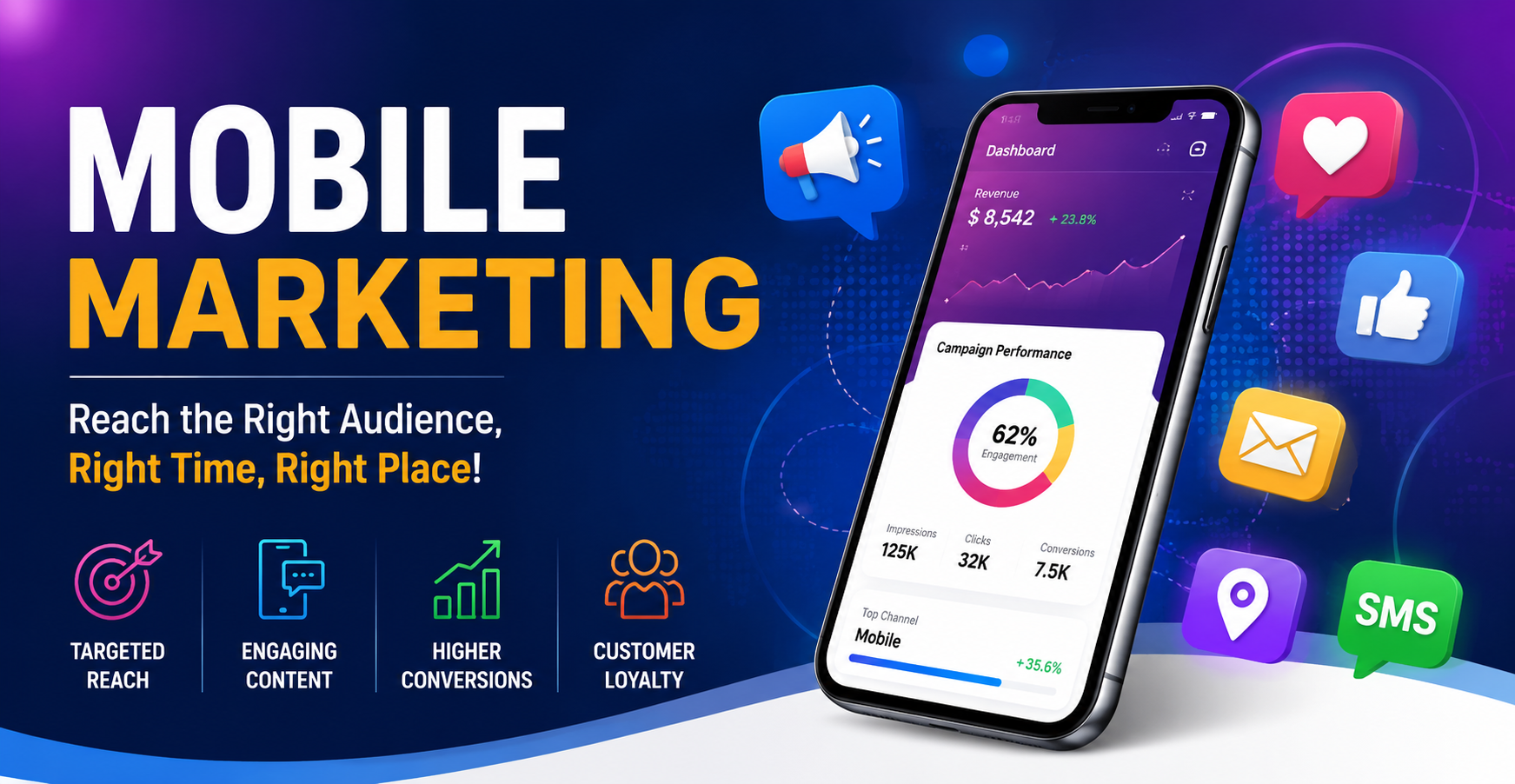
Mobile marketing refers to the practice of promoting products, services, brands, or content through mobile devices such as smartphones and tablets. It enables businesses to connect with users anytime and anywhere through channels like mobile apps, SMS, social media, websites, email, and push notifications.
For students aspiring to build careers in Digital Marketing, Artificial Intelligence, Cyber Security, Data Analytics, and related fields, understanding mobile marketing is no longer optional. It is a fundamental skill that helps professionals create targeted campaigns, improve customer engagement, and drive business growth.
In this comprehensive guide, we will explore mobile marketing, its importance, strategies, benefits, challenges, and future trends while understanding how students can build successful careers in this growing field.
What is Mobile Marketing?
Mobile marketing is a digital marketing strategy that focuses on reaching users through mobile devices. It involves delivering personalized content, advertisements, promotional messages, and customer experiences optimized specifically for smartphones and tablets.
Unlike traditional marketing, mobile marketing allows businesses to interact with customers in real time based on their location, interests, behavior, and preferences.
Some common mobile marketing channels include:
- Mobile-friendly websites
- SMS marketing
- Mobile applications
- Social media marketing
- Push notifications
- Mobile advertising
- QR code marketing
- Location-based marketing
- In-app advertising
- Mobile email marketing
The primary goal of mobile marketing is to provide seamless experiences that encourage user engagement, conversions, and customer loyalty.
Why Mobile Marketing is Important
The rapid increase in smartphone usage has made mobile marketing one of the most effective digital marketing strategies.
Massive Mobile User Base
Billions of people worldwide use smartphones daily. Most internet users access websites and social media platforms through mobile devices rather than desktop computers.
Higher User Engagement
People spend several hours each day on mobile apps, social media platforms, messaging applications, and mobile browsers, creating numerous opportunities for marketers to engage with them.
Personalized Communication
Mobile marketing enables businesses to send personalized messages based on user behavior, demographics, interests, and location.
Better Conversion Rates
Mobile-optimized campaigns often generate higher click-through rates and conversions because users can take immediate action directly from their devices.
Real-Time Interaction
Businesses can communicate instantly with customers through SMS, push notifications, and social media updates.
Evolution of Mobile Marketing
Early Mobile Marketing
Initially, mobile marketing was limited to simple text messages and promotional SMS campaigns.
Rise of Smartphones
The introduction of smartphones revolutionized mobile marketing by enabling:
- Mobile applications
- Mobile internet browsing
- Social media access
- Video marketing
- Location-based advertising
Modern Mobile Marketing
Today's mobile marketing incorporates advanced technologies such as:
- Artificial Intelligence
- Machine Learning
- Predictive Analytics
- Chatbots
- Marketing Automation
- Augmented Reality (AR)
These innovations help marketers create highly targeted and personalized campaigns.
Key Components of Mobile Marketing
Mobile-Friendly Websites
A mobile-friendly website is designed to function smoothly on smartphones and tablets.
Key features include:
- Fast loading speed
- Responsive design
- Easy navigation
- Optimized images
- Mobile-friendly content
Search engines prioritize mobile-friendly websites, making mobile optimization essential for SEO.
SMS Marketing
SMS marketing remains one of the most effective communication channels.
Benefits include:
- High open rates
- Instant delivery
- Direct communication
- Cost-effectiveness
Businesses use SMS marketing for:
- Promotional offers
- Event reminders
- Transaction notifications
- Customer support updates
Mobile Applications
Mobile apps help businesses maintain direct engagement with users.
Popular app marketing techniques include:
- App Store Optimization (ASO)
- Push notifications
- In-app advertising
- Loyalty programs
Companies use apps to improve customer experiences and strengthen brand loyalty.
Social Media Marketing
Most social media activity occurs on mobile devices.
Popular platforms include:
- YouTube
- X
- Snapchat
Mobile users actively engage with content through likes, comments, shares, and purchases.
Push Notifications
Push notifications are messages sent directly to users through mobile apps.
Benefits include:
- Instant communication
- Higher engagement rates
- Personalized experiences
- Increased customer retention
Mobile Email Marketing
Emails optimized for mobile devices improve readability and user engagement.
Best practices include:
- Responsive design
- Short subject lines
- Clear call-to-action buttons
- Mobile-friendly layouts
Types of Mobile Marketing Strategies
Location-Based Marketing
Location-based marketing uses GPS and mobile data to deliver targeted messages based on a user's geographic location.
Examples include:
- Nearby store promotions
- Local event advertisements
- Restaurant offers
- Retail discounts
QR Code Marketing
QR codes provide quick access to:
- Websites
- Product information
- Registration forms
- Educational resources
Businesses use QR codes in advertisements, brochures, and product packaging.
In-App Marketing
In-app marketing targets users while they are actively using mobile applications.
Methods include:
- Banner ads
- Video ads
- Sponsored content
- Rewarded advertisements
Mobile Search Advertising
Mobile search ads appear in search engine results when users search using mobile devices.
Benefits include:
- High visibility
- Strong purchase intent
- Better targeting capabilities
Video Marketing
Mobile users consume large amounts of video content daily.
Popular formats include:
- Short videos
- Product demonstrations
- Educational content
- Live streaming
Video marketing significantly improves engagement and brand awareness.
Benefits of Mobile Marketing
Improved Customer Reach
Mobile marketing enables businesses to reach audiences globally.
Cost-Effective Marketing
Many mobile marketing channels offer affordable advertising solutions compared to traditional marketing.
Better User Experience
Mobile optimization improves website usability and customer satisfaction.
Enhanced Customer Engagement
Interactive content, notifications, and personalized communication encourage higher engagement.
Higher Return on Investment (ROI)
Targeted campaigns often produce better results and higher conversions.
Mobile Marketing and Artificial Intelligence
Artificial Intelligence is transforming mobile marketing in remarkable ways.
AI-Powered Personalization
AI analyzes user behavior to deliver personalized recommendations and advertisements.
Examples include:
- Product suggestions
- Personalized emails
- Dynamic advertisements
Chatbots
AI-powered chatbots provide:
- Instant customer support
- Lead generation
- User assistance
- Automated responses
Predictive Analytics
AI predicts customer behavior and helps marketers optimize campaigns.
Benefits include:
- Better targeting
- Improved conversions
- Enhanced customer retention
Students interested in AI and Digital Marketing can leverage these technologies to create highly effective marketing strategies.
Mobile Marketing and Cyber Security
As mobile marketing grows, cyber security becomes increasingly important.
Data Privacy Concerns
Businesses collect large amounts of customer data through mobile channels.
Protecting user information is essential for:
- Building trust
- Regulatory compliance
- Preventing data breaches
Mobile Application Security
Secure app development helps protect users from:
- Malware attacks
- Unauthorized access
- Data theft
Secure Payment Systems
Mobile commerce requires strong security measures such as:
- Encryption
- Multi-factor authentication
- Secure payment gateways
Cyber security professionals play a critical role in ensuring safe mobile experiences.
Mobile Marketing Best Practices
Create Mobile-Optimized Content
Content should be:
- Easy to read
- Visually appealing
- Responsive across devices
Focus on User Experience
A smooth user experience increases engagement and conversions.
Use Personalization
Personalized content improves customer satisfaction and campaign performance.
Optimize Website Speed
Slow websites can significantly reduce user engagement and search rankings.
Monitor Analytics
Track important metrics such as:
- Click-through rates
- Conversion rates
- Engagement levels
- User retention
Data-driven decisions improve marketing effectiveness.
Common Challenges in Mobile Marketing
Privacy Regulations
Businesses must comply with privacy regulations and obtain user consent before collecting data.
Device Diversity
Different screen sizes and operating systems create optimization challenges.
Ad Fatigue
Excessive advertising can lead to lower engagement rates.
Security Risks
Mobile platforms are frequent targets of cyber threats and fraud attempts.
Future Trends in Mobile Marketing
AI-Driven Marketing
Artificial Intelligence will continue enhancing personalization and automation.
Voice Search Optimization
More users are conducting searches through voice assistants.
Businesses must optimize content for voice search queries.
Augmented Reality (AR)
AR experiences are becoming increasingly popular in retail, education, and entertainment.
5G Technology
5G networks will enable:
- Faster loading speeds
- Better mobile experiences
- Enhanced video marketing
- Advanced interactive applications
Hyper-Personalization
Businesses will use advanced analytics and AI to deliver highly customized experiences.
Career Opportunities in Mobile Marketing
Students learning digital marketing can explore various career paths, including:
Mobile Marketing Specialist
Responsible for creating and managing mobile campaigns.
Digital Marketing Executive
Works across multiple marketing channels, including mobile platforms.
SEO Specialist
Optimizes websites for mobile search performance.
Social Media Manager
Creates mobile-first social media campaigns.
Marketing Automation Expert
Uses AI and automation tools to streamline marketing activities.
Mobile App Marketing Manager
Focuses on app growth, engagement, and user acquisition.
Data Analyst
Analyzes campaign performance and customer behavior.
Cyber Security Analyst
Protects mobile applications and customer data from security threats.
Why Students Should Learn Mobile Marketing
Mobile marketing is one of the fastest-growing areas in digital marketing. Every business, from startups to multinational corporations, relies on mobile channels to reach customers.
Students who learn mobile marketing gain valuable skills in:
- Search Engine Optimization (SEO)
- Social Media Marketing
- Content Marketing
- Marketing Analytics
- Artificial Intelligence
- Data Analysis
- Mobile Advertising
- Customer Experience Management
Combining mobile marketing with AI and Cyber Security knowledge creates strong career opportunities in today's technology-driven job market.
Conclusion
Mobile marketing has become an essential component of modern business strategy. With billions of users relying on smartphones daily, businesses must create mobile-first experiences to remain competitive. From SMS marketing and mobile apps to AI-driven personalization and location-based advertising, mobile marketing offers endless opportunities for engagement and growth.
For students looking to build successful careers in Digital Marketing, Artificial Intelligence, Data Analytics, and Cyber Security, learning mobile marketing is a strategic investment. As technologies continue to evolve, professionals with expertise in mobile marketing, AI integration, and cyber security will remain highly sought after across industries.
The future belongs to businesses and professionals who understand how to connect with audiences on mobile devices. By mastering mobile marketing today, students can position themselves for rewarding careers in the digital economy of tomorrow.