

Personal Branding Online: Build Your Digital Identity for Career Growth in 2026
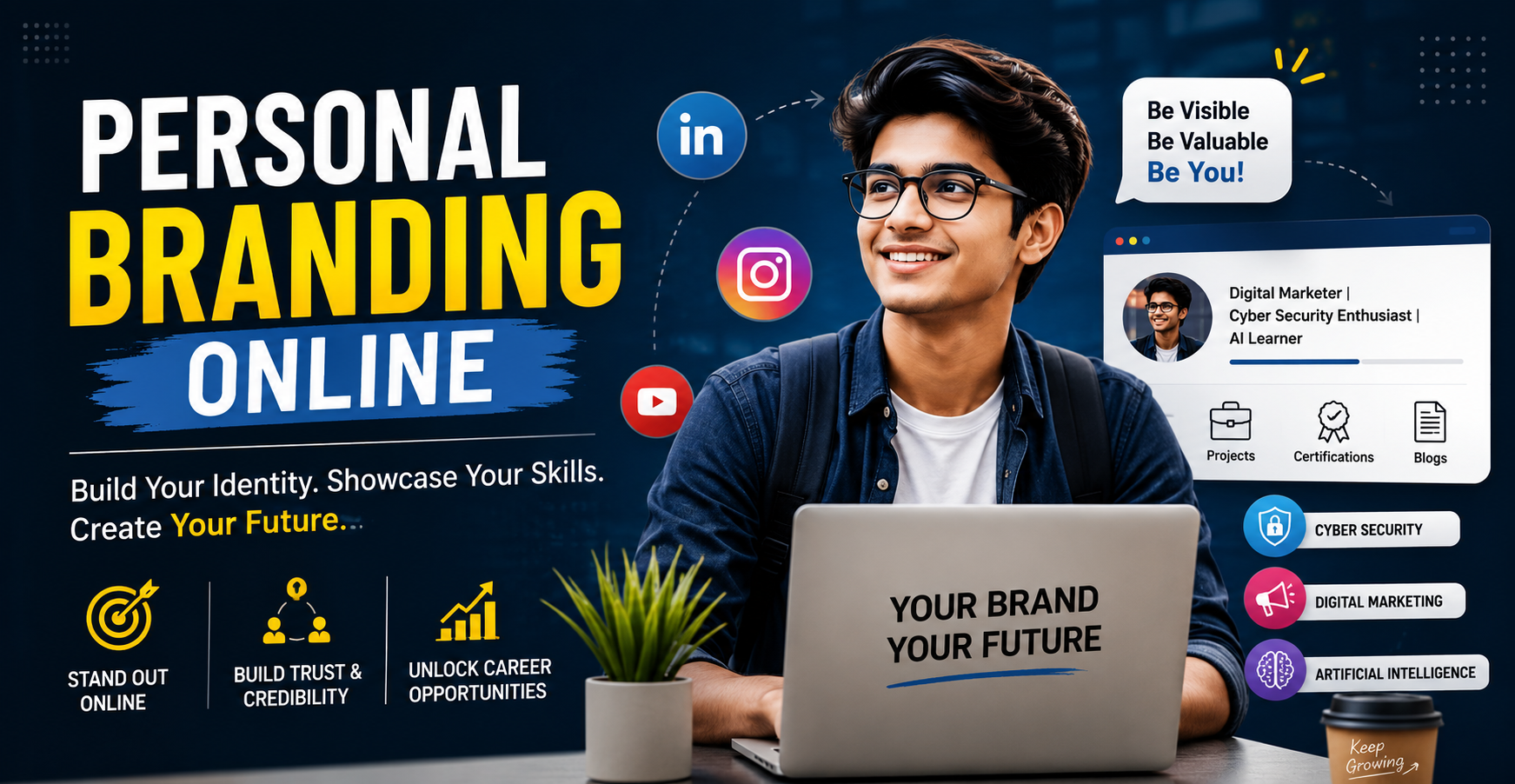
In today’s digital world, your online presence is often your first impression. Whether you are a student learning digital marketing, an aspiring cybersecurity professional, a freelance graphic designer, or someone exploring artificial intelligence careers, your personal brand can open doors to internships, freelance projects, networking opportunities, and full-time jobs.
When recruiters, clients, or companies search your name on Google, what do they see? A strong personal brand helps you control that narrative. It highlights your skills, achievements, personality, and professional expertise in a way that builds trust and credibility.
Many students believe personal branding is only for influencers or celebrities. That is not true anymore. In 2026, personal branding has become essential for students, freelancers, entrepreneurs, digital marketers, AI enthusiasts, ethical hackers, and content creators. Companies prefer individuals who already demonstrate expertise online through content, portfolios, and active professional engagement.
This blog will help you understand:
- What personal branding online means
- Why students should focus on it
- How to create a powerful digital identity
- Best platforms for branding
- Personal branding strategies for digital marketing, cybersecurity, and AI careers
- Common mistakes to avoid
- Future trends in online branding
By the end of this blog, you will know how to build a professional online image that can accelerate your career growth.
What is Personal Branding Online?
Personal branding online is the process of creating and managing your digital identity on the internet. It represents how people perceive you through your social media profiles, website, content, portfolio, videos, blogs, and online interactions.
Your personal brand includes:
- Your skills and expertise
- Your communication style
- Your online content
- Your achievements and certifications
- Your values and personality
- Your professional image
For example:
- A digital marketer may share SEO tips and Instagram growth strategies.
- A cybersecurity student may post ethical hacking tutorials and security awareness content.
- An AI learner may publish machine learning projects and AI tools reviews.
Your online brand becomes your digital resume.
Why Personal Branding is Important for Students
Better Career Opportunities
Recruiters often search candidates online before hiring. A strong LinkedIn profile, portfolio website, or active content presence can increase your chances of getting selected.
Students with visible online skills stand out from the competition.
Builds Trust and Credibility
When you regularly share valuable content, people begin to see you as knowledgeable and trustworthy.
For example:
- Posting SEO case studies
- Sharing cybersecurity awareness tips
- Uploading AI project demos
These activities help establish authority in your field.
Helps in Freelancing
Freelancing platforms are highly competitive. Clients prefer freelancers who already have an online presence showcasing their work and expertise.
A strong personal brand helps you:
- Get more clients
- Charge higher fees
- Build long-term professional relationships
Expands Your Network
Personal branding helps you connect with:
- Industry experts
- Recruiters
- Companies
- Fellow students
- Potential mentors
Networking can lead to internships, collaborations, and job referrals.
Creates Long-Term Value
Your skills may evolve, but your personal brand keeps growing over time. Consistent online presence can benefit your career for years.
Key Elements of a Strong Personal Brand
Define Your Niche
One of the biggest mistakes students make is trying to talk about everything.
Instead, focus on a niche.
Examples:
- SEO and content marketing
- Ethical hacking
- AI tools and automation
- Social media marketing
- Web development
- Data science
Choosing a niche helps people remember you for a specific expertise.
Optimize Your Social Media Profiles
Your profiles should look professional and consistent.
Important platforms include:
- X (Twitter)
- GitHub
- YouTube
- Behance
- Medium
Your profile should include:
- Professional profile picture
- Clear bio
- Skills and certifications
- Portfolio links
- Contact information
Use searchable keywords like:
- Digital Marketing Student
- SEO Expert
- Cybersecurity Learner
- AI Enthusiast
- Ethical Hacker
- Content Strategist
These keywords improve discoverability.
Create Valuable Content
Content is the foundation of online personal branding.
You can create:
- Blog posts
- Reels
- YouTube videos
- Carousels
- Tutorials
- Case studies
- Infographics
Useful content attracts followers and establishes expertise.
Best Platforms for Personal Branding
LinkedIn is the most important platform for professional branding.
Students should:
- Complete their profile
- Add certifications
- Share industry insights
- Connect with professionals
- Post regularly
Popular LinkedIn content ideas:
- Internship experiences
- Marketing case studies
- AI tool reviews
- Cybersecurity awareness tips
- Learning journeys
Instagram is powerful for visual branding.
Students can create:
- Educational reels
- Tips and tricks
- Carousel posts
- Mini tutorials
- Behind-the-scenes content
Instagram works especially well for:
- Digital marketing
- Content creation
- Graphic design
- AI tutorials
YouTube
YouTube helps build authority quickly.
Students can upload:
- Tutorials
- Course reviews
- Project demonstrations
- Tool comparisons
- Career guidance videos
Video content creates strong audience engagement.
GitHub
Cybersecurity and AI students should use GitHub to showcase projects.
Examples:
- Python scripts
- AI models
- Machine learning projects
- Security tools
- Automation projects
Recruiters often check GitHub profiles for technical candidates.
Personal Website
A portfolio website acts as your online headquarters.
Include:
- About section
- Skills
- Projects
- Certifications
- Blog
- Resume
- Contact form
A personal website improves credibility and search visibility.
Personal Branding for Digital Marketing Students
Showcase Practical Skills
Digital marketing students should focus on practical achievements rather than only certifications.
Examples:
- SEO ranking improvements
- Instagram growth screenshots
- Ad campaign results
- Website traffic analytics
- Email marketing performance
Real results attract attention.
Learn Content Marketing
Content marketing is one of the strongest branding tools.
Write blogs about:
- SEO strategies
- Social media trends
- Affiliate marketing
- Google Ads
- AI marketing tools
Educational content builds trust with audiences.
Use Video Marketing
Short-form videos perform extremely well.
Students can create:
- Instagram reels
- YouTube Shorts
- LinkedIn videos
Topics may include:
- Digital marketing tips
- Trending AI tools
- Marketing hacks
- Productivity tips
Video content increases engagement and reach.
Personal Branding for Cybersecurity Students
Share Cybersecurity Awareness Content
Cybersecurity is a growing field with huge demand.
Students can post about:
- Online safety tips
- Password security
- Phishing scams
- Ethical hacking basics
- Data privacy
Awareness content performs well because it helps people protect themselves online.
Build Technical Projects
Practical projects strengthen your personal brand.
Examples:
- Security audit reports
- Vulnerability assessment labs
- Network security simulations
- Linux security projects
Showcase these projects on GitHub and LinkedIn.
Participate in Online Communities
Cybersecurity communities help build visibility.
Engage in:
- Capture The Flag competitions
- Cybersecurity forums
- Ethical hacking communities
- Open-source security projects
Community participation increases learning and networking opportunities.
Personal Branding for AI Students
Share AI Projects
Artificial intelligence is one of the fastest-growing industries.
Students should showcase:
- Machine learning projects
- AI chatbots
- Data visualization projects
- Automation workflows
- AI-generated applications
Projects demonstrate practical knowledge.
Explain Complex Topics Simply
People appreciate creators who simplify technical concepts.
Create content on:
- Machine learning basics
- Generative AI tools
- Prompt engineering
- AI automation
- Neural networks
Simple explanations attract more engagement.
Stay Updated with AI Trends
AI changes rapidly.
Follow trends like:
- AI productivity tools
- Automation platforms
- AI content generation
- AI ethics
- AI coding assistants
Posting updated information keeps your brand relevant.
SEO Tips for Personal Branding
Use Searchable Keywords
Using relevant keywords improves discoverability.
Examples:
- Best digital marketing student portfolio
- Cybersecurity career roadmap
- AI projects for beginners
- Personal branding tips for students
- LinkedIn optimization strategies
Include keywords naturally in:
- Headlines
- Bios
- Blog titles
- Captions
- Website pages
Start Blogging
Blogging improves:
- Search engine visibility
- Website traffic
- Professional credibility
Write educational blogs regularly.
Popular blog topics:
- SEO tutorials
- Ethical hacking basics
- AI tools for students
- Freelancing tips
- Career growth strategies
Optimize Your LinkedIn Profile
LinkedIn SEO is very important.
Add keywords to:
- Headline
- About section
- Skills section
- Experience section
Example:
“Digital Marketing Student | SEO Specialist | Social Media Strategist | AI Marketing Enthusiast”
Content Ideas for Personal Branding
Educational Content
Teach something useful.
Examples:
- “5 SEO Tools Every Student Should Use”
- “Beginner Guide to Ethical Hacking”
- “Top AI Tools for Productivity”
Behind-the-Scenes Content
Show your learning process.
Examples:
- Course learning journey
- Internship experiences
- Project development process
- Daily routine videos
Authenticity builds audience connection.
Success Stories and Case Studies
People love real results.
Share:
- Traffic growth screenshots
- Campaign performance
- Project achievements
- Freelancing milestones
Case studies increase credibility.
Interactive Content
Interactive posts improve engagement.
Examples:
- Polls
- Quizzes
- Q&A sessions
- Live streams
Audience interaction strengthens your online community.
Common Personal Branding Mistakes
Inconsistency
Posting once a month will not build a strong brand.
Consistency matters more than perfection.
Create a content schedule and post regularly.
Copying Others
Learning from creators is fine, but blindly copying reduces originality.
Develop your own communication style and perspective.
Ignoring Professionalism
Avoid:
- Unprofessional profile pictures
- Offensive content
- False claims
- Misleading information
Professional behavior builds long-term credibility.
Focusing Only on Followers
A smaller engaged audience is better than fake followers.
Focus on:
- Value
- Trust
- Consistency
- Skills
Quality audience matters more than numbers.
How to Build Your Personal Brand Step-by-Step
Step 1: Identify Your Skills
Ask yourself:
- What am I good at?
- What do I enjoy learning?
- Which industry interests me?
Choose a clear direction.
Step 2: Create Professional Profiles
Update:
- GitHub
- Portfolio website
Maintain consistent branding across platforms.
Step 3: Start Creating Content
Begin with simple content:
- Tips
- Tutorials
- Short videos
- Learning experiences
You do not need expensive equipment to start.
Step 4: Build Connections
Engage with:
- Industry professionals
- Recruiters
- Students
- Communities
Networking helps your growth.
Step 5: Improve Continuously
Learn new skills regularly.
Stay updated with:
- Digital marketing trends
- Cybersecurity threats
- AI advancements
Continuous learning strengthens your brand.
Future of Personal Branding in 2026 and Beyond
AI-Powered Branding
AI tools now help creators:
- Generate content ideas
- Edit videos
- Design graphics
- Optimize SEO
- Automate workflows
Students who combine AI with creativity will have a major advantage.
Video Content Will Dominate
Short-form video continues to grow rapidly.
Platforms like:
- Instagram Reels
- YouTube Shorts
- LinkedIn Video
will remain essential for branding.
Authenticity Will Matter More
Audiences prefer genuine creators over fake perfection.
People connect with:
- Real experiences
- Honest learning journeys
- Practical insights
Authenticity creates stronger communities.
Conclusion
Personal branding online is no longer optional for students and professionals. In the digital era, your online identity can influence your career opportunities, networking potential, and professional growth.
Whether you are learning digital marketing, cybersecurity, or artificial intelligence, building a strong personal brand can help you:
- Stand out from competitors
- Build trust and authority
- Attract career opportunities
- Grow your network
- Create long-term professional success
Start small but stay consistent. Share your learning journey, create valuable content, build projects, and engage with your audience regularly.
Remember, personal branding is not about pretending to be perfect. It is about showing your skills, growth, knowledge, and passion authentically.
The earlier you start building your online presence, the stronger your digital future will become.