

IT Compliances and Regulations: Complete Guide for Students and Businesses
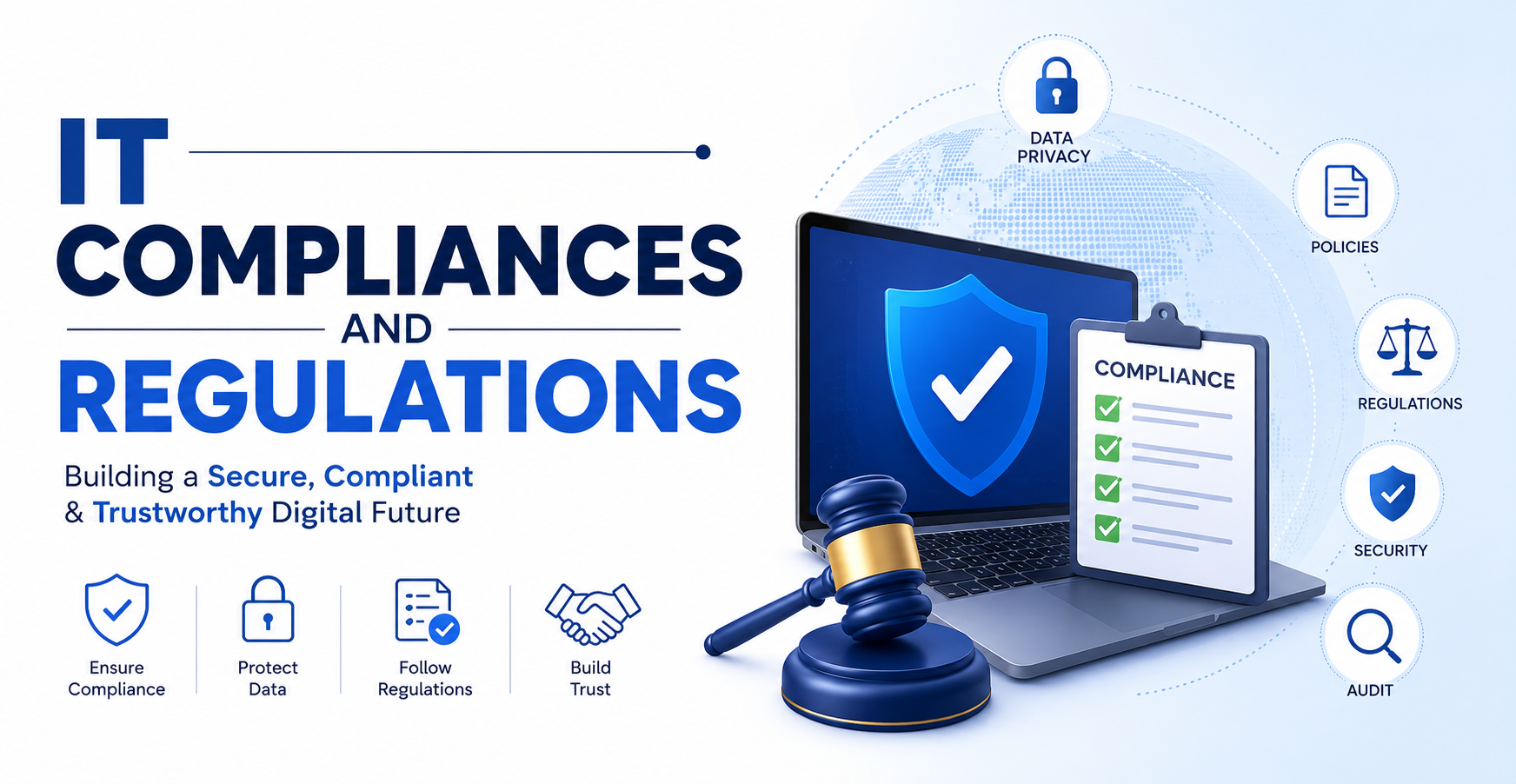
In today’s digitally connected world, businesses heavily rely on technology, cloud computing, Artificial Intelligence (AI), digital marketing platforms, and online communication systems. While technology creates endless opportunities, it also introduces serious risks related to data breaches, cyber attacks, privacy violations, and legal issues. This is where IT compliances and regulations become extremely important.
Whether you are a student learning Cyber Security, a Digital Marketing professional handling customer data, or an AI enthusiast working with automation tools, understanding IT compliance is now a critical skill.
Organizations across industries must follow specific IT laws, cyber security standards, and data protection regulations to ensure secure operations and legal compliance. Failure to follow these regulations can result in heavy penalties, loss of customer trust, legal action, and reputational damage.
In this blog, we will explore everything about IT compliances and regulations, including their importance, types, frameworks, cyber laws, industry standards, career opportunities, and future trends.
What are IT Compliances and Regulations?
IT compliance refers to the process of following legal, industry, and security standards that govern the use, storage, management, and protection of digital information and IT systems.
IT regulations are rules created by governments, regulatory bodies, and industry organizations to ensure:
- Data security
- Privacy protection
- Ethical technology usage
- Secure online transactions
- Cyber risk management
- Information security
In simple words, IT compliance ensures that businesses use technology safely, legally, and responsibly.
Why are IT Compliances Important?
As cyber threats continue increasing, organizations must protect customer information and digital infrastructure.
Key Reasons Why IT Compliance Matters
Protects Sensitive Data
Organizations store:
- Customer details
- Banking information
- Medical records
- Business data
- Employee information
Compliance standards help secure this data.
Prevents Cyber Attacks
Cyber security regulations enforce strong security measures against hackers and cyber criminals.
Builds Customer Trust
Customers trust businesses that follow privacy and security standards.
Avoids Legal Penalties
Non-compliance can lead to massive fines and lawsuits.
Improves Business Reputation
Compliance demonstrates professionalism and responsibility.
Difference Between IT Compliance and Cyber Security
Many students confuse compliance with cyber security, but both are different.
IT Compliance
Focuses on following laws, policies, and regulations.
Cyber Security
Focuses on protecting systems, networks, and data from cyber threats.
Compliance provides guidelines, while cyber security implements protection mechanisms.
Major IT Compliance Regulations and Standards
Different industries follow different compliance frameworks depending on the nature of their operations.
GDPR (General Data Protection Regulation)
The General Data Protection Regulation (GDPR) is one of the most important data privacy laws in the world.
It was introduced by the European Union (EU) to protect user privacy.
Key Features of GDPR
User Consent
Organizations must obtain clear permission before collecting user data.
Right to Access
Users can request access to their stored data.
Right to Delete
Users can ask companies to delete their personal information.
Data Breach Notification
Organizations must report breaches quickly.
Why GDPR Matters
Even businesses outside Europe must follow GDPR if they handle EU customer data.
ISO 27001 Information Security Standard
ISO 27001 is an international standard for Information Security Management Systems (ISMS).
It helps organizations:
- Manage cyber risks
- Protect sensitive information
- Improve security controls
Benefits of ISO 27001
Strong Data Security
Reduces risks of cyber attacks and data leaks.
Business Credibility
Improves customer trust and brand image.
Risk Management
Identifies and mitigates security threats.
PCI DSS Compliance
PCI DSS stands for Payment Card Industry Data Security Standard.
It applies to organizations handling debit and credit card information.
Main Objectives of PCI DSS
- Protect payment data
- Prevent online fraud
- Secure financial transactions
Businesses That Need PCI DSS
- E-commerce websites
- Banks
- Payment gateways
- Online shopping platforms
HIPAA Compliance
HIPAA stands for Health Insurance Portability and Accountability Act.
It is a healthcare data protection law in the United States.
Purpose of HIPAA
Protects:
- Patient records
- Medical data
- Healthcare information
Healthcare organizations must implement strict security measures.
SOC 2 Compliance
SOC 2 compliance focuses on data security and privacy controls for service providers.
It is commonly followed by:
- SaaS companies
- Cloud service providers
- Technology businesses
SOC 2 Principles
Security
Protect systems against unauthorized access.
Availability
Ensure system uptime and reliability.
Confidentiality
Protect sensitive information.
Cyber Security Laws in India
India has introduced multiple cyber laws and IT regulations to secure digital systems and online activities.
Information Technology Act 2000
The IT Act 2000 is India’s primary cyber law.
Objectives of the IT Act
- Prevent cyber crimes
- Regulate online transactions
- Promote e-commerce security
Important Areas Covered
Digital Signatures
Legal recognition for digital authentication.
Cyber Crime Penalties
Punishment for hacking and cyber fraud.
Electronic Records
Legal validity for electronic documents.
CERT-In Guidelines
CERT-In stands for Indian Computer Emergency Response Team.
It monitors cyber threats and incident responses in India.
Key Functions
- Cyber threat monitoring
- Incident reporting
- Security alerts
- Vulnerability management
Organizations must report cyber incidents within specific timelines.
Data Protection and Privacy Regulations
Data privacy has become one of the biggest concerns in the digital age.
Importance of Data Privacy
Users share massive amounts of personal information online, including:
- Contact details
- Payment information
- Browsing behavior
- Social media activity
Businesses must protect this information responsibly.
Data Protection Best Practices
Encryption
Encrypt sensitive information to prevent unauthorized access.
Access Control
Allow only authorized users to access data.
Regular Security Audits
Identify vulnerabilities proactively.
Employee Training
Educate staff about cyber security threats.
Multi-Factor Authentication (MFA)
Adds extra security layers.
IT Compliance in Digital Marketing
Digital marketers collect large amounts of customer data through:
- Websites
- Ads
- Email campaigns
- Social media
- Analytics tools
Compliance is essential to protect user privacy.
Compliance Rules for Digital Marketing
Cookie Consent
Websites must inform users about cookies and tracking.
Email Marketing Compliance
Follow anti-spam regulations.
User Data Protection
Secure customer databases and CRM systems.
Privacy Policies
Clearly explain how user data is collected and used.
AI and Compliance Regulations
Artificial Intelligence is transforming industries rapidly, but it also raises ethical and legal concerns.
Key AI Compliance Challenges
Data Privacy Risks
AI systems often process sensitive data.
Bias and Fairness
AI algorithms may create unfair outcomes.
Transparency
Users should understand how AI systems make decisions.
Ethical AI Usage
Organizations must use AI responsibly.
Emerging AI Regulations
Governments worldwide are developing AI regulations focused on:
- Ethical AI
- Data protection
- Transparency
- AI accountability
Students learning AI should understand both technical and legal aspects.
Benefits of Compliance for Cyber Security
Better Risk Management
Organizations identify and address vulnerabilities effectively.
Improved Incident Response
Prepared organizations respond faster to cyber attacks.
Stronger Security Infrastructure
Compliance frameworks encourage best security practices.
Customer Confidence
Secure systems build trust.
Common Cyber Security Threats Businesses Face
Understanding cyber threats helps organizations improve compliance.
Phishing Attacks
Hackers trick users into sharing sensitive information.
Ransomware Attacks
Malicious software locks data until payment is made.
Data Breaches
Unauthorized access to confidential information.
Insider Threats
Employees may intentionally or accidentally compromise systems.
Malware and Viruses
Malicious software damages systems and steals data.
IT Compliance Audit Explained
An IT compliance audit checks whether an organization follows required standards and regulations.
Steps in a Compliance Audit
Risk Assessment
Identify potential security risks.
Policy Review
Evaluate company policies and procedures.
Technical Assessment
Review firewalls, encryption, and security controls.
Documentation Verification
Check compliance-related records.
Reporting
Provide recommendations and improvement plans.
Careers in IT Compliance and Cyber Security
IT compliance is becoming one of the fastest-growing career fields.
Popular Career Opportunities
IT Compliance Analyst
Ensures organizations follow regulations.
Cyber Security Analyst
Protects systems from cyber threats.
Risk Management Specialist
Analyzes business and security risks.
Information Security Auditor
Conducts security and compliance audits.
Data Privacy Officer
Manages data protection strategies.
Skills Required for IT Compliance Careers
Students interested in cyber security and compliance should learn:
- Network security
- Risk assessment
- Ethical hacking
- Information security
- Data privacy laws
- Cloud security
- Compliance frameworks
- Security auditing
Best Certifications for IT Compliance and Cyber Security
Certifications improve career opportunities significantly.
Popular Certifications
Certified Information Systems Auditor (CISA)
Focuses on auditing and compliance.
Certified Information Systems Security Professional (CISSP)
Advanced cyber security certification.
Certified Ethical Hacker (CEH)
Teaches ethical hacking techniques.
CompTIA Security+
Beginner-friendly cyber security certification.
ISO 27001 Lead Auditor
Specialized compliance certification.
Future Trends in IT Compliance
AI Governance
AI regulations will become stricter globally.
Cloud Security Compliance
Cloud infrastructure compliance will become more important.
Zero Trust Security
Organizations will adopt advanced security architectures.
Automation in Compliance
AI-based tools will automate compliance monitoring.
Stronger Data Privacy Laws
Governments will introduce stricter privacy regulations.
How Students Can Start Learning IT Compliance
Students can begin learning through:
- Cyber Security courses
- Ethical hacking training
- Compliance certification programs
- AI governance studies
- Cloud security courses
- Digital privacy workshops
Practical learning through labs, internships, and simulations is highly recommended.
Best Tools Used in IT Compliance
Security Monitoring Tools
- Splunk
- IBM QRadar
- SolarWinds
Compliance Management Tools
- ServiceNow
- OneTrust
- LogicGate
Vulnerability Assessment Tools
- Nessus
- OpenVAS
- Qualys
Endpoint Security Tools
- CrowdStrike
- Microsoft Defender
- SentinelOne
Challenges Organizations Face in Compliance
Despite its importance, compliance can be challenging.
Common Challenges
Rapidly Changing Regulations
Laws evolve frequently.
High Implementation Costs
Compliance systems require investment.
Lack of Skilled Professionals
Cyber security talent shortage continues growing.
Complex IT Infrastructure
Managing hybrid systems can be difficult.
Conclusion
IT compliances and regulations have become essential in today’s digital environment. As businesses increasingly rely on cloud computing, AI systems, digital marketing platforms, and online transactions, protecting sensitive data and following legal standards is more important than ever.
For students pursuing careers in Digital Marketing, Cyber Security, Artificial Intelligence, and IT management, understanding compliance frameworks and cyber laws provides a major competitive advantage.
Organizations that prioritize compliance not only avoid legal risks but also strengthen cyber security, improve customer trust, and build a strong digital reputation.
The future of technology will continue evolving, and professionals with expertise in IT compliance, cyber security regulations, data privacy, and AI governance will remain in extremely high demand.
Learning IT compliance today is not just a technical skill — it is a smart career investment for the future.