


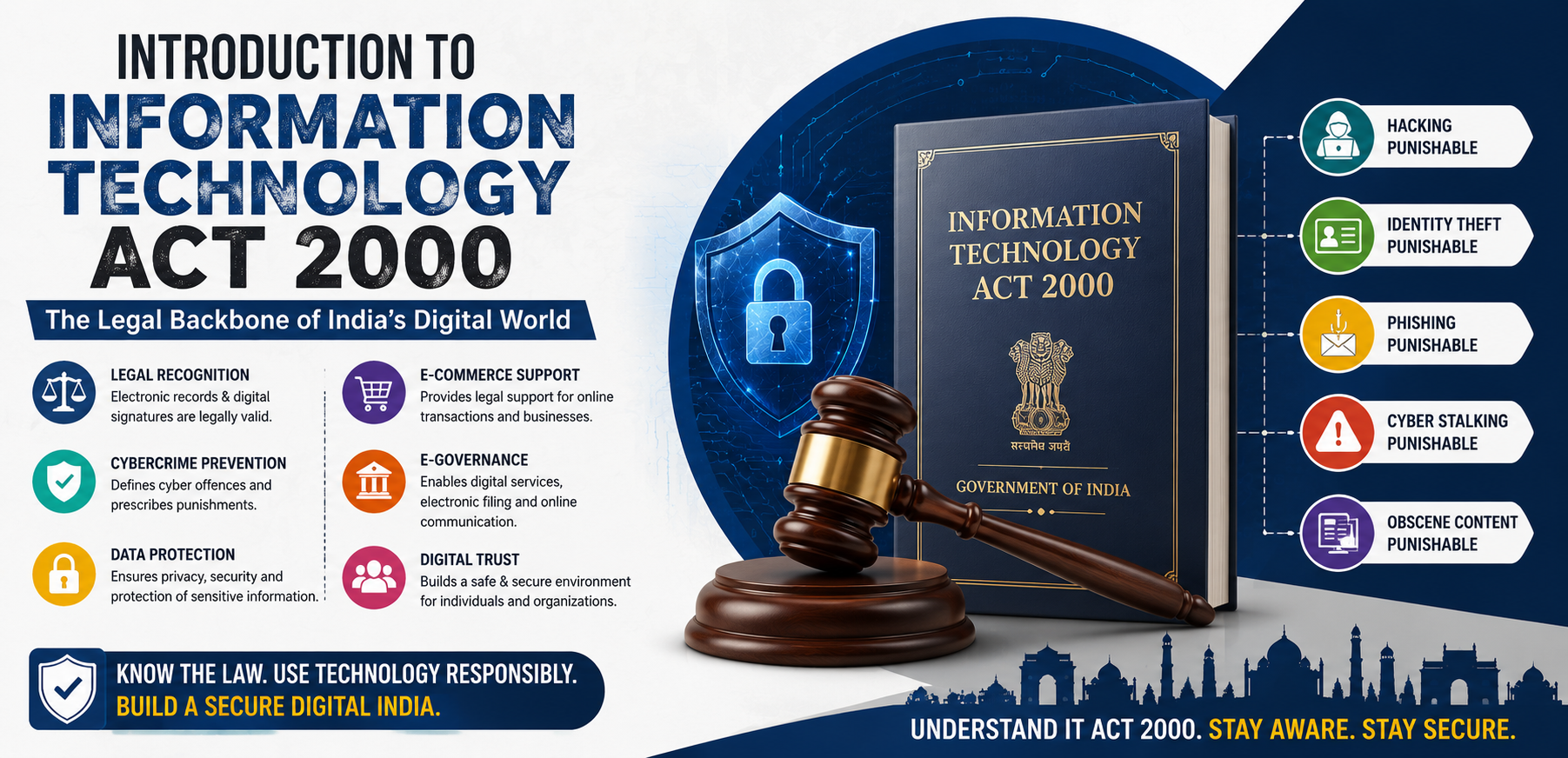
Introduction to Information Technology Act 2000
In today’s digital world, almost everything happens online. From shopping and banking to education and business communication, technology has become a major part of our daily lives. With the rapid growth of the internet, people now depend heavily on digital platforms for personal and professional activities. However, this digital growth has also increased the risk of cybercrimes such as hacking, online fraud, identity theft, phishing attacks, and data breaches.
To manage these digital challenges and create a secure online environment, the Government of India introduced the Information Technology Act 2000, commonly known as the IT Act 2000. This act became India’s first cyber law and laid the foundation for digital security and electronic governance in the country.
For students planning to build careers in Cyber Security, Artificial Intelligence, Ethical Hacking, or Digital Marketing, understanding the IT Act is extremely important. Today, companies are looking for professionals who not only have technical skills but also understand cyber laws, digital ethics, and online security practices.
Students searching for the best Cyber Security Courses in Navi Mumbai or advanced Digital Marketing and AI Courses should have basic knowledge of the IT Act because it directly impacts the digital industry.
What is the Information Technology Act 2000 ?
The Information Technology Act 2000 is a legal framework introduced by the Government of India to regulate online activities, digital communication, and electronic transactions.
The act was passed on 17th October 2000 with the aim of providing legal recognition to electronic records and digital signatures. It also helps prevent cybercrimes and ensures safer online practices.
Before the IT Act, there were no specific laws in India to deal with cyber offences. As internet usage increased rapidly, the need for a dedicated cyber law became essential. The IT Act was introduced to bridge this gap and provide legal protection in the digital environment.
Today, the IT Act plays a major role in protecting individuals, businesses, government organizations, and educational institutions from online threats.
Why is the IT Act 2000 Important ?
The IT Act is important because it creates trust and security in the digital world. Without proper cyber laws, online fraud and cybercrime could grow uncontrollably.
The act helps in:
- Providing legal recognition to electronic records
- Supporting secure online transactions
- Protecting users from cybercrime
- Promoting safe internet usage
- Encouraging digital business growth
- Strengthening cyber security practices
- Supporting e-governance initiatives
For students pursuing Cyber Security Training in Navi Mumbai, understanding cyber laws is just as important as learning technical skills like ethical hacking, penetration testing, and network security.
Main Objectives of the Information Technology Act 2000
The IT Act was introduced with several important objectives to support India’s growing digital ecosystem.
- Legal Recognition for Electronic Records
The act gives legal recognition to electronic documents such as emails, online contracts, digital certificates, and electronic records.
This means digital communication can now be legally accepted in courts and business transactions.
- Legal Recognition for Digital Signatures
Digital signatures help verify the authenticity of online documents and transactions.
The IT Act recognizes digital signatures as legally valid, making online communication safer and more reliable.
Digital signatures are commonly used in:
- Online banking
- E-commerce platforms
- Government portals
- Corporate agreements
- Digital contracts
- Prevention of Cybercrime
One of the major goals of the IT Act is to reduce cybercrime.
The act defines different cyber offences and provides punishments for crimes such as:
- Hacking
- Identity theft
- Phishing attacks
- Data theft
- Cyber stalking
- Online fraud
- Publishing illegal content online
- Support for E-Commerce
The IT Act supports online businesses and digital transactions.
It creates a legal framework for electronic contracts and online payments, which helps businesses operate smoothly in the digital marketplace.
This is especially important for students learning Digital Marketing Courses in Navi Mumbai because most modern businesses rely heavily on online marketing and e-commerce platforms.
- Promotion of E-Governance
The act encourages digital communication between government departments and citizens.
It allows the government to offer services electronically, reducing paperwork and improving efficiency.
Examples include:
- Online tax filing
- Digital certificates
- Online applications
- Electronic tenders
- Digital public services
Key Features of the Information Technology Act 2000
The IT Act includes several features that help regulate and secure digital activities in India.
- Electronic Records are Legally Valid
One of the biggest advantages of the IT Act is that electronic records are legally recognized.
Businesses and organizations can now use digital documentation instead of traditional paperwork.
This has made communication faster, easier, and more efficient.
- Digital Signatures Improve Security
Digital signatures play a major role in secure online communication.
They help verify the identity of users and protect electronic documents from tampering.
As cyber threats continue to grow, digital signatures have become an essential part of online security.
- Cybercrime Laws and Penalties
The IT Act defines various cyber offences and includes punishments for criminals involved in digital crimes.
This helps law enforcement agencies take action against cybercriminals and improve cyber safety.
- Data Protection and Privacy
The act includes provisions to protect sensitive user information and maintain digital privacy.
Organizations handling customer data are expected to follow security practices to prevent unauthorized access or misuse.
For students pursuing AI Courses in Navi Mumbai, understanding data privacy is becoming increasingly important because Artificial Intelligence systems depend heavily on data.
Important Amendments to the IT Act
As technology evolved, the IT Act was updated to address modern cyber security challenges.
In 2008, important amendments were introduced to strengthen cyber laws in India.
Some major additions included:
- Cyber Terrorism Provisions
The amendment introduced stricter laws against cyber terrorism and attacks on critical digital infrastructure.
- Protection Against Identity Theft
Identity theft and misuse of passwords or digital identities became punishable offences.
- Stronger Data Protection Rules
Organizations became more responsible for protecting sensitive personal data.
- Child Protection Measures
The law introduced stricter regulations against publishing or sharing harmful content involving minors.
- Improved Electronic Authentication
The amendment strengthened rules related to electronic signatures and secure digital communication.
These changes made the IT Act more relevant to today’s digital environment.
Types of Cybercrimes Covered Under the IT Act
The IT Act covers various cyber offences that commonly occur online.
Hacking
Unauthorized access to computer systems or networks is considered hacking and is punishable under the law.
Identity Theft
Using another person’s passwords, digital signatures, or personal information without permission is a criminal offence.
Phishing Attacks
Fraudulent emails or fake websites designed to steal sensitive information are punishable under the IT Act.
Cyber Stalking
Online harassment, threats, or stalking through social media or digital platforms is covered under cybercrime laws.
Data Theft
Stealing confidential business or personal information from computer systems is a serious offence.
Publishing Obscene Content
Sharing or transmitting inappropriate content electronically is prohibited under the act.
Students pursuing Ethical Hacking Courses in Navi Mumbai are often taught about these cyber threats and how to prevent them ethically and legally.
Important Sections of the Information Technology Act 2000
The IT Act contains several important sections related to cyber offences and digital security.
- Section 43
Deals with unauthorized access, downloading files illegally, introducing viruses, and damaging computer systems.
- Section 66
Covers hacking and dishonest computer-related activities.
- Section 66C
Addresses identity theft and misuse of passwords or digital signatures.
- Section 66D
Deals with cheating and online fraud through impersonation.
- Section 67
Punishes publishing or transmitting obscene electronic content.
- Section 69
Allows the government to monitor or intercept digital communication under specific legal conditions.
- Section 72
Protects confidentiality and privacy of electronic information.
Understanding these sections is useful for students interested in Cyber Security Careers, Digital Forensics, and Cyber Law.
Role of IT Act in Cyber Security
Cyber security has become one of the fastest-growing industries in India.
As businesses and organizations continue to shift online, protecting digital systems from cyber threats has become a top priority.
The IT Act supports cyber security by:
- Defining cyber offences clearly
- Establishing legal penalties
- Encouraging safe online practices
- Protecting sensitive information
- Supporting cybercrime investigations
- Promoting digital trust
Students enrolled in Cyber Security Courses in Navi Mumbai should understand how cyber laws work alongside technical security measures.
Today, companies prefer professionals who can combine technical cyber security knowledge with legal awareness.
Importance of IT Act for Digital Marketing Professionals
Digital marketers handle customer data, online campaigns, websites, social media accounts, and email marketing systems daily.
Because of this, understanding cyber laws and digital ethics has become extremely important for marketing professionals.
The IT Act helps digital marketers:
- Protect customer information
- Avoid misuse of data
- Follow legal marketing practices
- Maintain secure online platforms
- Prevent cyber fraud
- Build customer trust
Students pursuing Digital Marketing Training in Navi Mumbai should learn about cyber awareness and online privacy regulations to become responsible digital professionals.
Importance of IT Act for AI Professionals
Artificial Intelligence is transforming industries across the world.
AI systems rely heavily on data collection, automation, and machine learning algorithms. Therefore, understanding data privacy and cyber laws is important for AI professionals.
The IT Act helps ensure responsible use of technology by promoting:
- Data protection
- Digital privacy
- Ethical technology practices
- Secure digital systems
- Responsible AI development
Students pursuing AI and Machine Learning Courses in Navi Mumbai should develop both technical and legal understanding to build secure and trustworthy AI systems.
Challenges Faced by the IT Act 2000
Although the IT Act has improved cyber law enforcement in India, certain challenges still exist.
- Rapidly Changing Technology
Technology evolves quickly, making it difficult for laws to keep up with emerging cyber threats.
- Increase in Cyber Attacks
Cybercriminals are using advanced tools and AI-based techniques to perform sophisticated attacks.
- Cross-Border Cybercrime
Many cybercrimes originate from other countries, making investigation and legal action more difficult.
- Lack of Cyber Awareness
Many individuals and businesses still lack awareness about cyber safety and online security practices.
- Data Privacy Concerns
Growing concerns about user privacy and data misuse require stronger cyber laws and stricter regulations.
These challenges highlight the growing importance of advanced Cyber Security Training Programs in Navi Mumbai.
Career Opportunities in Cyber Security and Cyber Law
The increasing demand for cyber security and legal compliance has created many exciting career opportunities.
Popular career options include:
- Cyber Security Analyst
- Ethical Hacker
- Information Security Specialist
- Digital Forensics Expert
- SOC Analyst
- Cyber Crime Investigator
- Data Privacy Consultant
- Network Security Engineer
- Cyber Law Consultant
Students completing professional Cyber Security Courses in Navi Mumbai can build successful careers in these high-demand industries.
Similarly, digital marketers and AI professionals with knowledge of cyber laws are highly valued by modern organizations.
Why Students Should Learn About the IT Act 2000 ?
Students entering the technology field should understand both technical concepts and legal responsibilities.
Learning about the IT Act helps students:
- Understand cybercrime laws
- Improve digital awareness
- Use technology responsibly
- Protect sensitive information
- Build ethical professional practices
- Stay legally compliant
Institutes offering Cyber Security, AI, and Digital Marketing Courses in Navi Mumbai should include cyber law awareness as part of their curriculum to prepare industry-ready professionals.
Future of Cyber Laws in India
India’s digital economy is growing rapidly, and cyber laws will continue to evolve with new technologies.
Emerging technologies such as:
- Artificial Intelligence
- Blockchain
- Cloud Computing
- Internet of Things (IoT)
- Big Data Analytics
are creating new challenges related to privacy, security, and digital ethics.
Future cyber laws in India may focus on:
- Stronger data protection policies
- AI governance regulations
- Better digital privacy laws
- Stricter cybercrime penalties
- International cyber cooperation
- Enhanced cyber security standards
Students pursuing advanced Cyber Security and AI Courses in Navi Mumbai should stay updated with evolving cyber regulations to remain competitive in the industry.
Conclusion
The Information Technology Act 2000 is one of the most important laws governing India’s digital environment. It provides legal recognition to electronic records, supports secure online transactions, and helps prevent cybercrime.
In today’s technology-driven world, understanding cyber laws is essential for students and professionals involved in Cyber Security, Artificial Intelligence, and Digital Marketing.
The IT Act not only protects individuals and businesses from online threats but also promotes trust, privacy, and responsible use of technology.
For students planning to build successful careers in the digital industry, enrolling in professional Cyber Security Courses, Digital Marketing Courses, or AI Courses in Navi Mumbai can provide the technical knowledge and cyber law awareness needed to succeed.
As cyber threats continue to evolve, the demand for skilled professionals with strong cyber security and legal knowledge will continue to grow, making the Information Technology Act 2000 an important topic for every aspiring technology professional.