

Intro to Malware: A Simple Beginner’s Guide to Understanding Cyber Threats
We live in a world where almost everything is connected to the internet. From online shopping and digital payments to social media and cloud storage, technology has become a part of our everyday life. While the internet makes life easier, it also brings several risks and one of the biggest cyber threats today is Malware.
You may have heard terms like viruses, ransomware, spyware, or hacking attacks in news reports or social media. All of these are connected to malware in some way. As cyber attacks continue to increase worldwide, understanding malware has become extremely important for students, professionals, businesses, and even regular internet users.
Whether you are planning to build a career in cyber security, ethical hacking, digital marketing, or artificial intelligence, learning about malware is one of the first and most important steps.
Today, students searching for the best Cyber Security Course in Navi Mumbai are increasingly interested in understanding how cyber attacks happen and how systems can be protected from online threats.
In this blog, we’ll understand malware in a simple and practical way — what it is, how it works, different types of malware, how it spreads, and how students can protect themselves while building valuable cyber security skills for the future.
What is Malware?
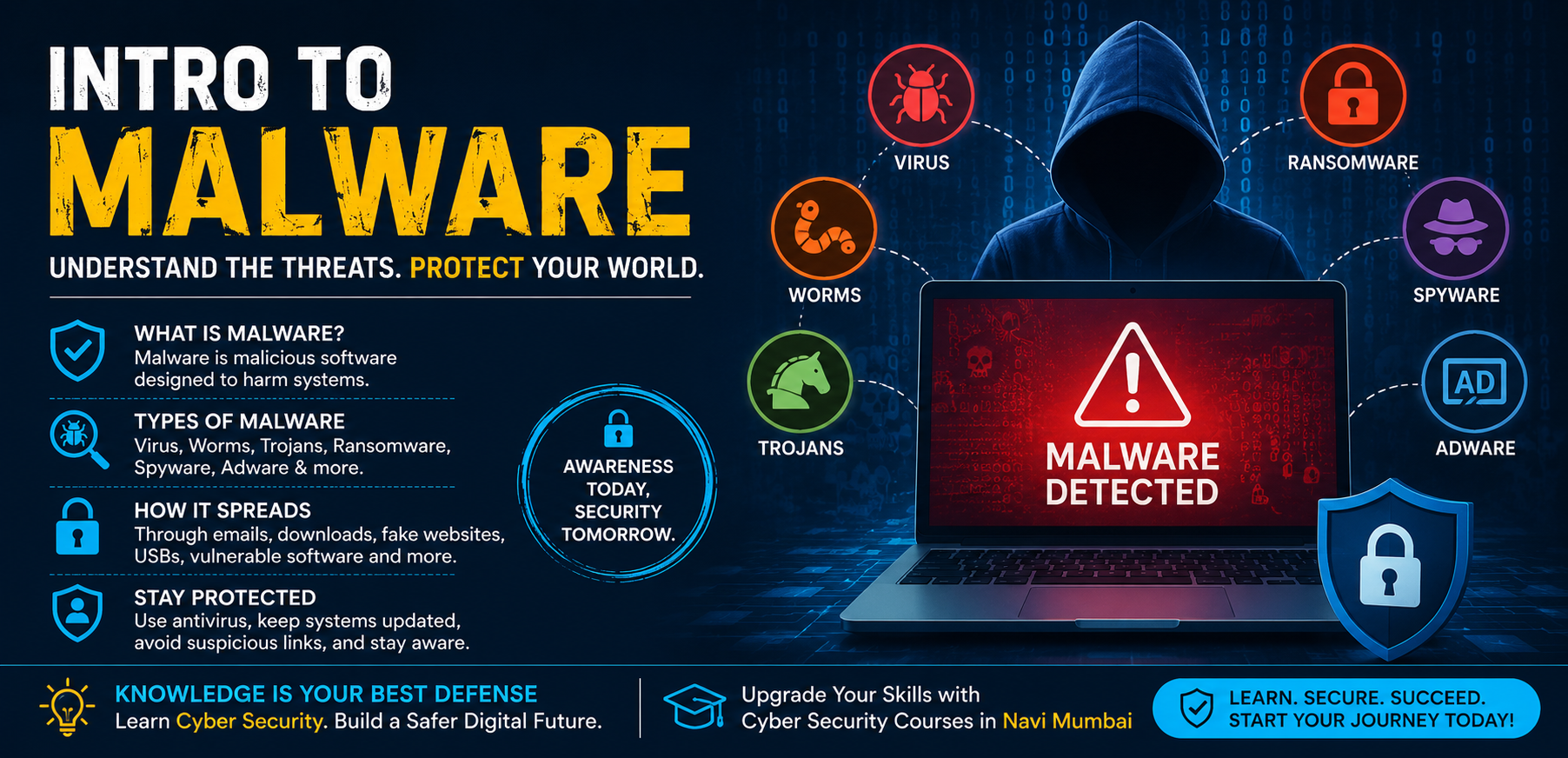
Malware is short for “Malicious Software.”
It refers to any software or program that is intentionally designed to harm a computer, network, smartphone, website, or system.
Cybercriminals create malware for different reasons, such as:
- Stealing personal data
- Accessing bank information
- Damaging files
- Monitoring user activity
- Taking control of systems
- Demanding ransom money
In simple words, malware is harmful software that enters devices without permission and performs unwanted activities in the background.
Malware can target:
- Personal computers
- Smartphones
- Business servers
- Websites
- Cloud systems
- Company networks
This is why malware analysis and cyber threat protection are major topics in professional Cyber Security Training in Navi Mumbai.
Why is it Important to Learn About Malware?
Many people think cyber security is only for programmers or hackers. But the truth is, everyone who uses the internet should understand the basics of malware.
Today, cyber attacks are becoming more common. Students, working professionals, businesses, and even schools are targeted by cybercriminals.
Learning about malware helps students:
- Stay safe online
- Protect personal information
- Avoid scams and fraud
- Understand cyber attacks
- Build technical skills
- Explore careers in cyber security
For students interested in ethical hacking or digital safety, malware is one of the most important beginner topics.
That’s one reason why Cyber Security Courses in Navi Mumbai are becoming increasingly popular among students and freshers.
How Does Malware Enter a Device?
Malware usually enters systems secretly. In many cases, users don’t even realize their device has been infected.
Here are some common ways malware spreads:
- Fake E-Mails
Cybercriminals send phishing e-mails with infected links or attachments.
For example:
- Fake job offers
- Bank alerts
- Lottery messages
- Suspicious invoices
Once users click the link or download the attachment, malware gets installed.
- Unsafe Downloads
Downloading cracked software, pirated movies, games, or fake applications from unknown websites is risky.
These files often contain hidden malware.
- Fake Websites
Some dangerous websites automatically download malicious files in the background.
- USB Devices
Infected USB drives can transfer malware from one system to another.
- Mobile Applications
Not every mobile app is safe. Some fake apps secretly collect data or install spyware.
- Software Vulnerabilities
Outdated software often contains security weaknesses that hackers exploit to install malware.
This is why cyber security experts always recommend keeping systems updated.
Different Types of Malware
Malware is not just one thing. There are many different types of malicious software, and each works differently.
Let’s understand the most common ones.
- Virus
A computer virus is one of the oldest and most well-known forms of malware.
It attaches itself to files or programs and spreads when users open infected files.
Viruses can:
- Corrupt data
- Slow down computers
- Delete files
- Damage systems
Unlike some other malware, viruses usually require user action to spread.
- Worm
Worms are dangerous because they can spread automatically without human interaction.
They move across:
- Networks
- Devices
- Servers
Worms often slow down systems and consume large amounts of bandwidth.
- Trojan Horse
A Trojan looks like genuine software but secretly contains harmful code.
For example:
- Fake antivirus tools
- Cracked games
- Fraudulent applications
Once installed, Trojans may:
- Steal passwords
- Open system access for hackers
- Spy on users
The name comes from the famous “Trojan Horse” story because the threat hides inside something that appears safe.
Ransomware is one of the most dangerous cyber threats today. It locks or encrypts files and demands money to unlock them. Victims usually see messages asking for payment in exchange for restoring access.
Ransomware attacks have affected:
- Hospitals
- Businesses
- Educational institutions
- Government organizations
Learning ransomware prevention is a key part of modern Cyber Security Courses in Navi Mumbai.
- Spyware
Spyware secretly monitors user activity.
It may collect:
- Passwords
- Browsing history
- Banking information
- Personal data
The scary part is that spyware often works silently in the background without users noticing anything unusual.
Adware
Adware displays unwanted advertisements on devices.
While some adware is less dangerous, aggressive versions can:
- Slow devices
- Track user activity
- Redirect users to unsafe websites
- Keylogger
A keylogger records everything typed on a keyboard.
Hackers use keyloggers to steal:
- Login credentials
- Credit card information
- Banking passwords
This type of malware is especially dangerous for businesses and online banking users.
Signs Your Device May Have Malware
Sometimes malware infections are obvious, but in many cases they remain hidden for a long time.
Here are some common warning signs:
- Slow Device Performance
Your system suddenly becomes unusually slow.
- Frequent Pop-Ups
Too many advertisements or pop-up windows appear unexpectedly.
- Browser Redirects
Websites automatically redirect you to suspicious pages.
- Unknown Software
Apps or programs appear that you never installed.
- Frequent Crashes
Programs stop responding or crash regularly.
- Increased Internet Usage
Malware may secretly use internet data in the background.
- Antivirus Stops Working
Security software suddenly becomes disabled.
Recognizing these signs early can help reduce damage.
Real-World Malware Attacks
Some malware attacks have caused massive damage worldwide.
- WannaCry Ransomware Attack
This ransomware attack affected thousands of organizations globally, including hospitals and businesses.
- NotPetya Attack
One of the costliest cyber attacks ever, causing billions of dollars in damage.
- Zeus Trojan
A banking malware designed to steal financial information from users.
- I LOVEYOU Virus
One of the earliest major e-mail viruses that spread rapidly across the world.
These attacks show how dangerous malware can become when proper cyber security measures are missing.
How to Protect Yourself from Malware
The good news is that many malware attacks can be prevented with simple cyber safety habits.
- Use Trusted Antivirus Software
Antivirus programs help detect and remove malicious software.
- Avoid Clicking Suspicious Links
Never click unknown links in e-mails, SMS messages, or pop-ups.
- Keep Software Updated
Updates often fix important security vulnerabilities.
- Use Strong Passwords
Strong and unique passwords improve account security.
- Enable Two-Factor Authentication
This adds an extra layer of protection.
- Download Files Carefully
Always use trusted websites and official app stores.
- Backup Important Data
Regular backups help recover files after ransomware attacks.
- Learn Cyber Security Basics
Awareness is one of the strongest defenses against cyber attacks.
Students learning practical cyber security skills are better prepared to identify and prevent online threats.
Why Malware Knowledge Matters in Digital Marketing
Many people don’t realize that malware can also affect Digital Marketing.
For example:
- Business websites can get hacked
- Malware can spread through fake advertisements
- E-mail marketing campaigns may be exploited
- Customer data can be stolen
This is why many Digital Marketing Courses in Navi Mumbai now include basic cyber security awareness training.
Understanding online security helps marketers protect websites, users, and business data.
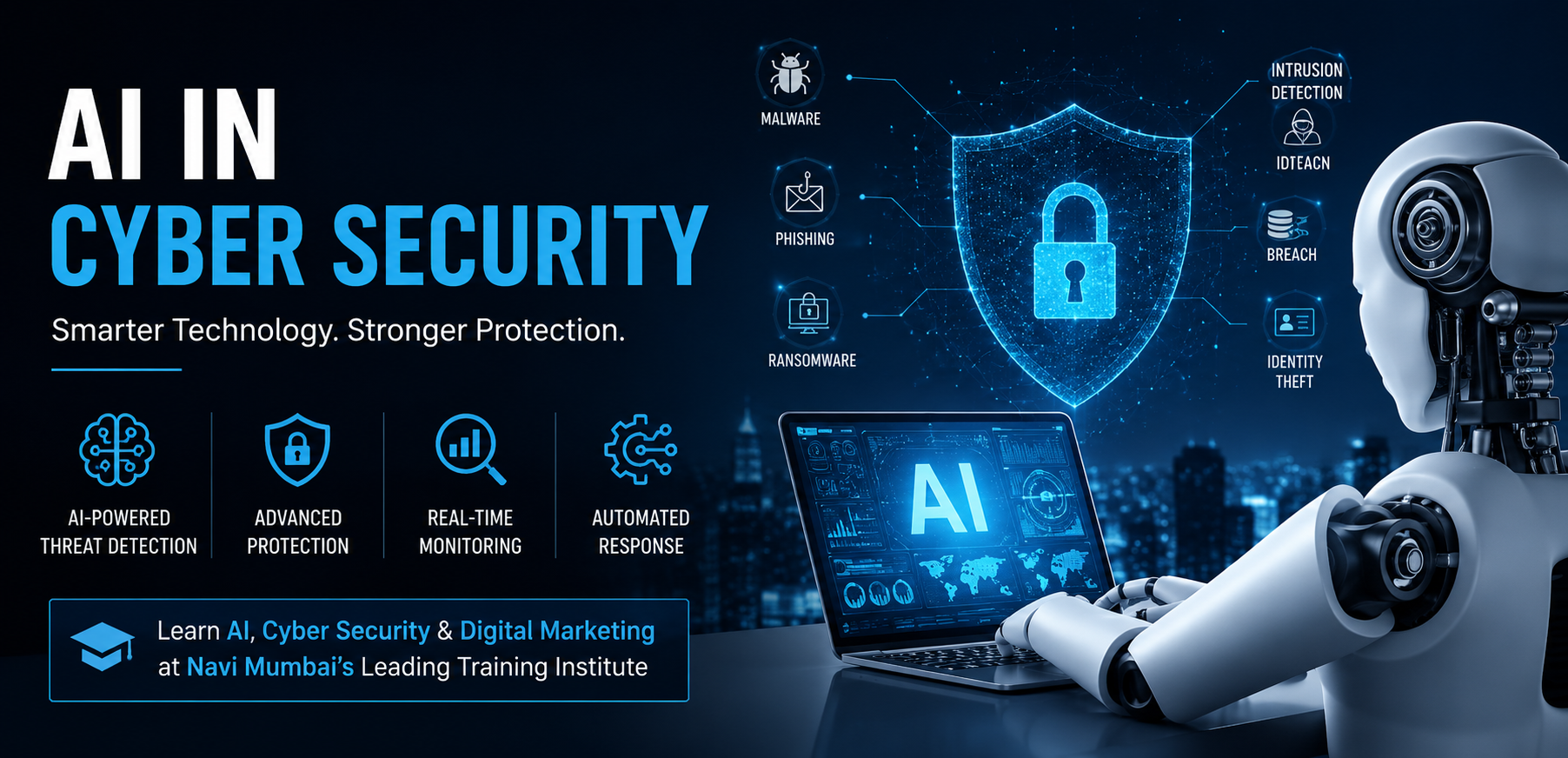
Role of Artificial Intelligence in Malware Detection
Artificial Intelligence is transforming cyber security.
Modern AI tools can:
- Detect unusual behavior
- Identify unknown threats
- Analyze malware patterns
- Predict cyber attacks
AI-powered systems can respond faster than traditional security methods.
Because of this growing demand, students are increasingly joining AI and Cyber Security Courses in Navi Mumbai to gain future-ready skills.
Career Opportunities in Cyber Security
Cyber security is one of the fastest-growing industries in the world.
Some popular career options include:
- Cyber Security Analyst
Monitors systems and detects threats.
- Ethical Hacker
Finds security weaknesses before hackers can exploit them.
- Malware Analyst
Studies malware behavior and develops protection strategies.
- Network Security Engineer
Secures company networks and infrastructure.
- Digital Forensics Expert
Investigates cyber crimes and security incidents.
Companies across industries are actively hiring skilled cyber security professionals.
Skills Needed for a Cyber Security Career
Students interested in cyber security should focus on learning:
- Networking basics
- Ethical hacking
- Malware analysis
- Operating systems
- Cloud security
- Cyber laws
- Threat detection
- Security tools
The best Cyber Security Institutes in Navi Mumbai provide practical labs and hands-on learning experiences to help students build real-world skills.
Why Students Should Learn Cyber Security Today
Cyber security is no longer optional in today’s digital world.
Here’s why learning cyber security is a smart career choice:
- Growing Industry Demand
Every company needs cyber security professionals.
- Excellent Career Opportunities
Cyber security jobs offer strong salary potential and career growth.
- Global Career Scope
Cyber security skills are valuable worldwide.
- Future-Proof Industry
As technology grows, cyber threats will continue to increase.
- Valuable Digital Skills
Cyber awareness is useful in almost every profession today.
Students who combine cyber security knowledge with AI and digital marketing skills will have even better career opportunities in the future.
The Future of Malware and Cyber Security
Cyber attacks are becoming smarter and more advanced every year.
Future malware may use:
- Artificial Intelligence
- Automation
- Deepfake technology
- Cloud vulnerabilities
- IoT device attacks
As digital transformation continues, cyber security professionals will play a critical role in protecting businesses and users.
That’s why cyber security remains one of the most promising career fields for students today.
Conclusion
Malware is one of the biggest threats in the digital world, and understanding it is essential for anyone using technology today.
From viruses and ransomware to spyware and Trojans, malware attacks can cause serious damage to individuals and businesses. However, with proper awareness, safe online habits, and cyber security knowledge, many of these threats can be prevented.
For students interested in ethical hacking, cyber security, AI, or digital marketing, learning about malware is the perfect starting point.
If you want to build practical cyber security skills and prepare for a successful tech career, joining a Cyber Security Course in Navi Mumbai can help you gain hands-on training in malware analysis, ethical hacking, network security, and cyber defense techniques.
With the right knowledge and continuous learning, students can build strong careers in the rapidly growing world of cyber security and digital technology.