

Password Security Best Practices
Let’s be real for a second.
Most people still use terrible passwords.
Things like:
- “123456”
- “password”
- their own name
- birthday dates
or something like “abc123”
And then when their Instagram, email, or even banking account gets hacked, they’re shocked.
But honestly, weak passwords are one of the biggest reasons cyberattacks happen today.
In today’s digital world, passwords protect almost everything:
- Your social media accounts
- Online banking
- Emails
- College portals
- OTT accounts
- Cloud storage
- Business systems
Basically… your entire digital life.
And that’s why password security is no longer optional it’s essential.
Whether you’re a student, freelancer, content creator, digital marketer, or someone learning Cyber Security, understanding password safety is one of the smartest things you can do today.
In fact, students joining Cyber Security courses in Navi Mumbai often begin with password security basics because it forms the foundation of online safety.
So in this blog, let’s understand password security in a simple, practical, and beginner-friendly way.
No complicated technical jargon.
Just real-world knowledge that actually helps.
Why Password Security Matters More Than Ever
Think about how many apps and websites you log into every single day.
Probably:
- Gmail
- Netflix
- Banking apps
- Shopping websites
- College portals
Now imagine if someone suddenly got access to all of them.
Pretty scary, right?
That’s exactly why password security matters.
Hackers today don’t always “hack” systems like movies show.
Sometimes they simply:
- Guess weak passwords
- Trick users
- Use leaked passwords
- Exploit careless habits
And unfortunately, many people unknowingly make things easy for them.The Real Problem with Weak Passwords
- A weak password is basically an open door for hackers.
And honestly, most weak passwords are predictable.
People often use:
- Names
- Mobile numbers
- Pet names
- Favorite teams
- Birth years
The problem?
Hackers know this.
They use automated tools that can test thousands , even millions of passwords within minutes.
Which means: A weak password might get cracked faster than you think.
What Actually Makes a Strong Password?
A strong password should be:
- Long
- Unique
- Difficult to guess
- Random-looking
A good password usually contains:
- Uppercase letters
- Lowercase letters
- Numbers
- Symbols
For example:
Sky#River92!Cloud
Now that’s much stronger than:
rohan123
The goal is simple: Make your password difficult for both humans and software to crack.
Why Students Should Take Password Security Seriously
A lot of students think: “Why would hackers target me?”
But honestly, hackers don’t only target big companies.
Students are actually common targets because many:
- Reuse passwords
- Ignore security settings
- Use public Wi-Fi carelessly
- Click suspicious links
And students store more important data than they realize:
- Personal documents
- Academic records
- Photos and videos
- Project files
- Banking details
- Social media accounts
One hacked account can create huge problems.
That’s why cybersecurity awareness is becoming important not only in Cyber Security courses in Navi Mumbai, but even in modern Digital Marketing programs.
Best Password Security Practices Everyone Should Follow
Now let’s talk about practical things you should actually start doing.
These habits may seem simple…
But they make a massive difference.
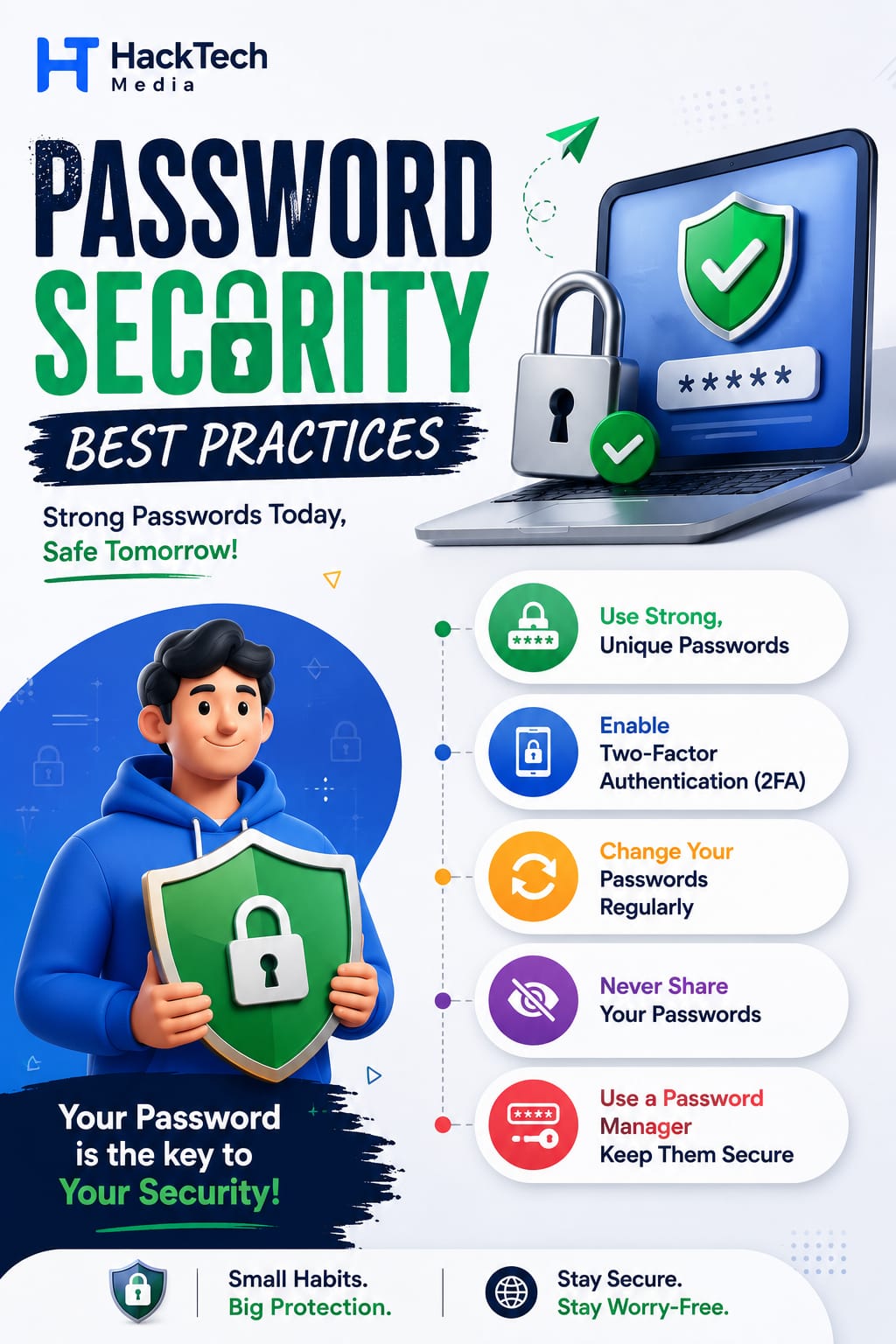
- Use Longer Passwords
- Short passwords are easier to crack.
- A password with: 12 to 16 characters is usually much safer.
- Longer passwords create more combinations, making them harder for hackers to guess.
- Never Use Personal Information
Avoid using:
- Your name
- Birthday
- Mobile number
- College name
- Pet name
because these details are often publicly available online.
Especially on social media.
- Mix Different Types of Characters
Strong passwords should include:
- Capital letters
- Small letters
- Numbers
- Symbols
Example:
- Learn@Cyber2026
This makes passwords much stronger.
Don’t Reuse Passwords
This is probably one of the biggest mistakes people make. Using the same password everywhere is risky.
Because if one platform gets hacked…all your other accounts become vulnerable too. Always use different passwords for different accounts. Yes, it’s slightly annoying. But it’s much safer.
Turn On Two-Factor Authentication (2FA)
If there’s one thing you should enable immediately, it’s this. Two-Factor Authentication adds an extra security layer. So even if someone knows your password, they still need:
- An OTP
- Authentication app approval
- Fingerprint verification
to access your account.
Use a Password Manager
Remembering multiple passwords can honestly become difficult.
That’s where password managers help.
They:
- Store passwords securely
- Generate strong passwords
- Autofill login details
which improves both convenience and security.
Avoid Saving Passwords on Public Computers
Never save passwords on:
- Cyber café systems
- Shared laptops
- College computers
And always log out properly after use.
Be Careful While Using Public Wi-Fi
Public Wi-Fi networks are convenient…
but not always secure.
Hackers can sometimes intercept data on unsecured networks.
Avoid logging into sensitive accounts on public Wi-Fi whenever possible.
Common Password Attacks You Should Know
Understanding attacks helps you stay alert.
And honestly, awareness itself is a huge part of cybersecurity.
- Brute Force Attacks
Hackers use automated software to try thousands of password combinations rapidly.
Weak passwords get cracked very quickly this way.
- Phishing Attacks
This is extremely common.
Hackers create fake:
Emails , Login pages , Websites to trick users into entering passwords.
For example: A fake banking email asking you to “verify your account.”
- Credential Stuffing
Hackers use leaked passwords from one website to access accounts on other platforms.
This is exactly why password reuse is dangerous.
- Keylogging
Some malware secretly records everything typed on a keyboard including passwords.
Scary, right?
- Social Engineering
Sometimes hackers don’t hack systems…
they manipulate people.
They trick users emotionally into sharing sensitive information.
And honestly, this works surprisingly often.
Password Security for Social Media
Students spend hours daily on social media.
But social media accounts are common hacking targets too.
Especially:
- Snapchat
A hacked account can lead to:
- Privacy issues
- Fake posts
- Reputation damage
- Financial scams
Strong passwords and 2FA are extremely important here.
Why Password Security Matters in Digital Marketing
A lot of students don’t realize this…
but cybersecurity matters in digital marketing too.
Digital marketers often manage:
- Websites
- Ad accounts
- Social media pages
- Customer databases
One compromised password can damage an entire business.
That’s why many Digital Marketing courses in Navi Mumbai now include basic cybersecurity concepts.
Password Security in Cyber Security Careers
If you’re planning a career in cybersecurity, password security is one of the first concepts you’ll learn deeply.
Students pursuing:
- Ethical hacking
- Network security
- Cyber Security certification courses
must understand:
- Authentication systems
- Password protection
- Security vulnerabilities
because these are essential in real-world cybersecurity jobs.
Common Password Myths
Let’s clear up some common misconceptions.
- “My Account Will Never Get Hacked”
Honestly, hackers target everyone.
Not just celebrities or large companies.
- “Simple Passwords Are Fine”
Weak passwords are one of the easiest ways to get hacked.
- “Using One Password Everywhere is Easier”
Yes…
but it’s also much more dangerous.
- “2FA is Too Annoying”
Maybe slightly.
But it dramatically improves account security.
Career Opportunities in Cyber Security
Learning cybersecurity can open doors to exciting career paths.
Popular roles include:
- Cyber Security Analyst
- Ethical Hacker
- Network Security Engineer
- Security Consultant
And the demand is only increasing.
- Why Learn Cyber Security in Navi Mumbai?
Navi Mumbai is becoming a growing hub for technology and skill-based education.
Future of Password Security
Technology is evolving rapidly.
Today, companies are already using:
- Fingerprint login
- Face recognition
- AI-based authentication
- Biometric systems
But passwords are still extremely important.
And understanding password security will continue being valuable for years to come.
How Students Can Start Learning Cyber Security
If cybersecurity interests you, start small.
You don’t need to learn everything at once.
Step 1: Learn Cybersecurity Basics
Understand online threats and security habits.
Step 2: Practice Safe Online Behavior
Cybersecurity starts with awareness.
Step 3: Explore Ethical Hacking Concepts
Learn how systems are attacked and protected.
Step 4: Join a Practical Course
A professional Cyber Security course in Navi Mumbai can help students gain practical skills and hands-on experience.
Conclusion
Password security may seem like a small topic…
but honestly, it plays a huge role in protecting your digital life.
From emails and banking apps to social media and business accounts, strong passwords help protect everything you do online.
And the truth is: Good cybersecurity often starts with simple habits.
Because in today’s digital world…
your password is often the first thing standing between you and a cyberattack.